
CASE STUDY 1: GUSTO
Reduced support call volume by 18% by redesigning self-service support systems across Help Center and product.
SNAPSHOT
Role: Content Strategy Lead, Customer Education (influenced design, content structure, and constructed final roll-out plan with cross-functional partners. Lead the team of writers who created content for final product, and advised on craft).
Scope: Help Center, in-product support, self-service systems
Timeframe: 2019–2021
My Approach
I treated this as a systems problem—not a content problem.
Instead of focusing on individual articles, I focused on:
how users actually seek help
how information is structured and retrieved
how support content integrates directly into the product experience
The goal: build a self-service system that reduces reliance on human support.
The Problem
Gusto’s support ecosystem wasn’t scaling with the product. Customers struggled to find answers quickly, leading to:
high support volume for easy answers
fragmented, redundant content
disconnect between product experience and help systems
Internally, content was created reactively—without a unified structure—resulting in duplication and gaps. This was a self-service systems failure, not just a content issue.
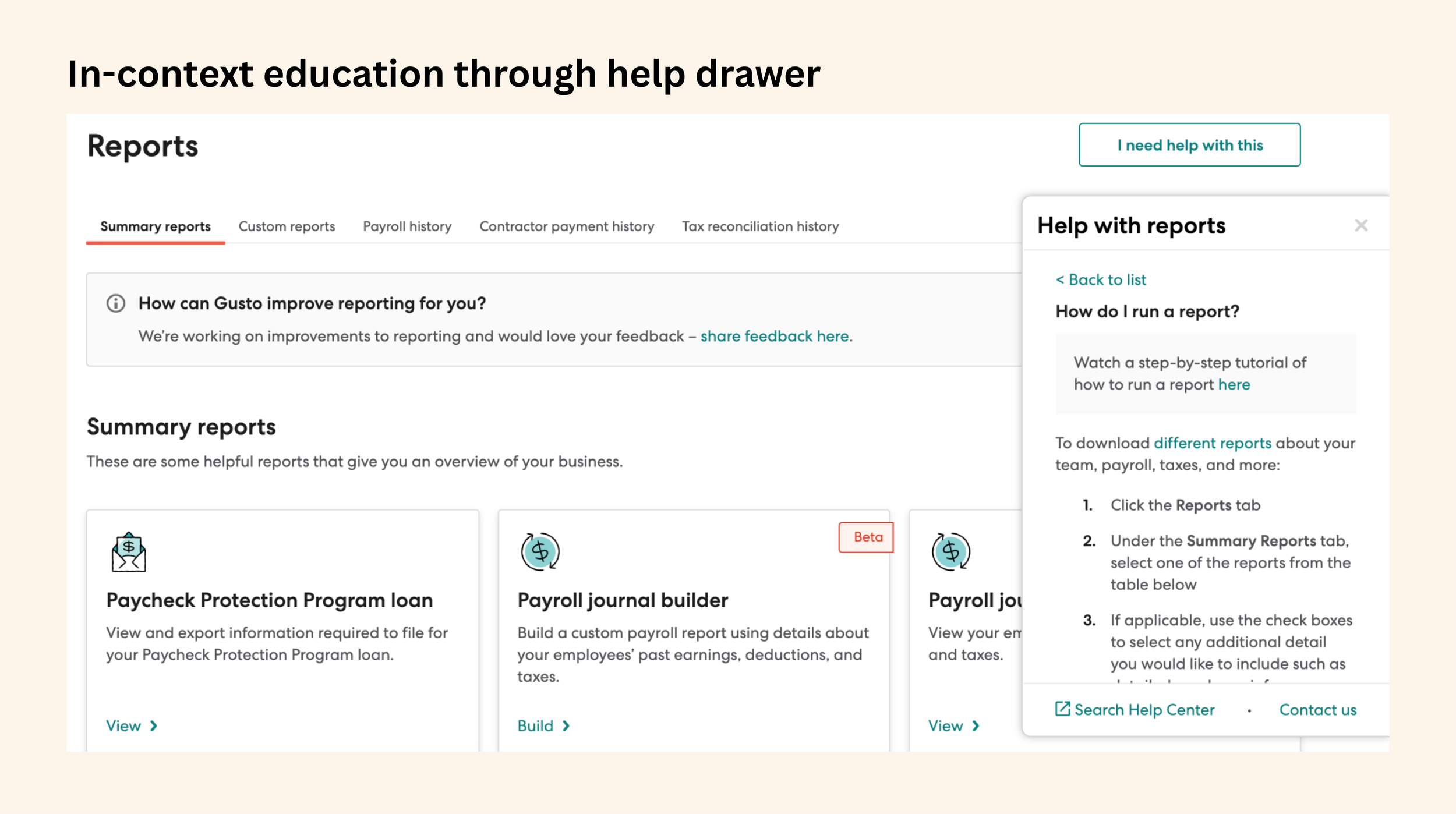
At Gusto, we learned through user research and CX data that certain areas of the product were really glitching up the user experience. But more than that, users wanted to know why certain actions would help them be better business owners, and craved more in-the-moment education and help.
Many startups struggle to effectively translate customer pain point data into product improvements, and are unsure of where to add supplemental help materials for impact. Global contextual design elements like a help drawer can help with both of those by allowing users to seek help if they need it, and giving them the right information at the right time.
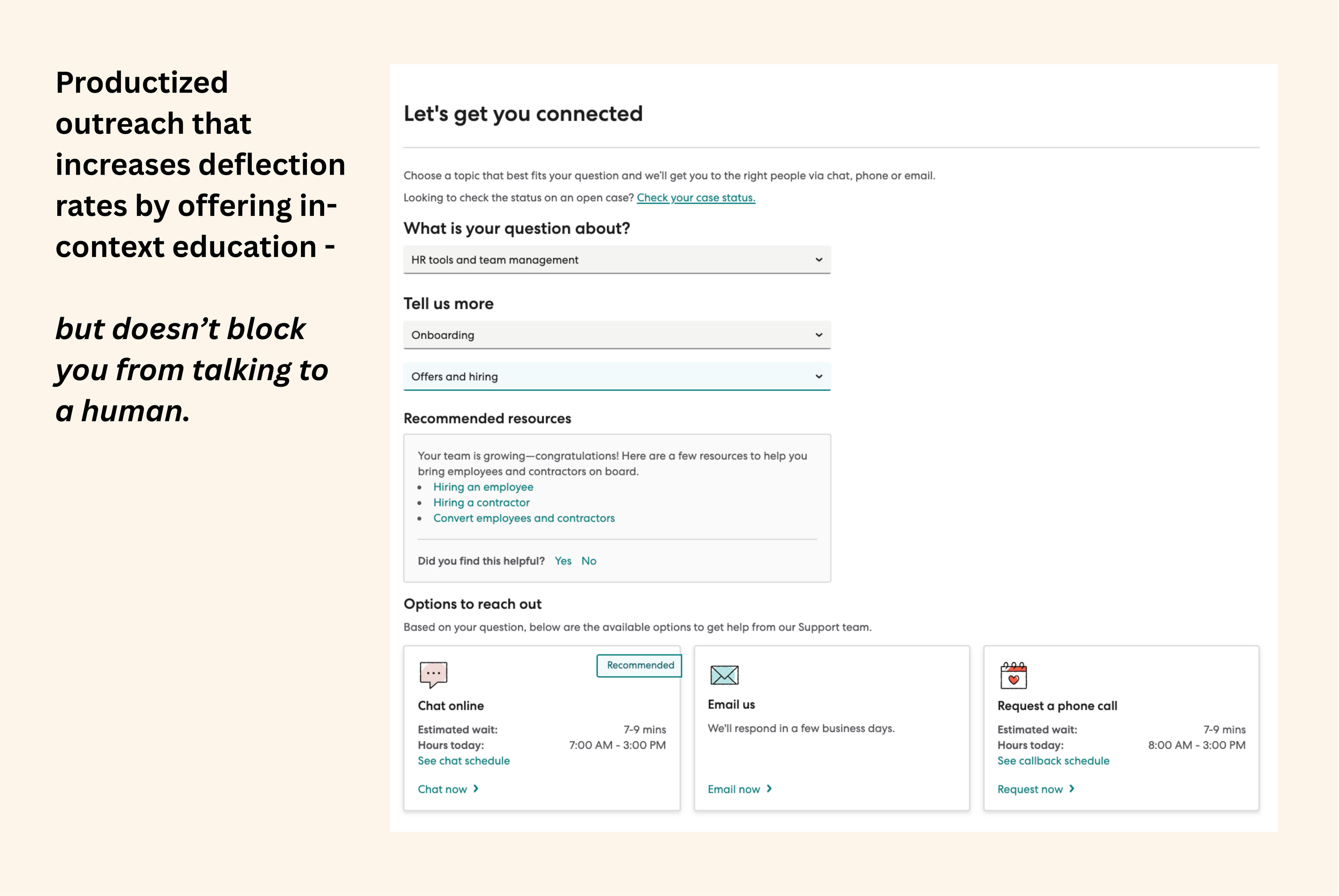
Project goal: Provide in-context help and education to users on high-friction pages, and ultimately drive down customer touchpoints to our CX team. Many startups struggle to effectively translate customer pain point data into product improvements, and are unsure of where to add supplemental help materials for impact. Global contextual design elements like a help drawer can help with both of those by allowing users to seek help if they need it, and giving them the right information at the right time.
Plan for scale
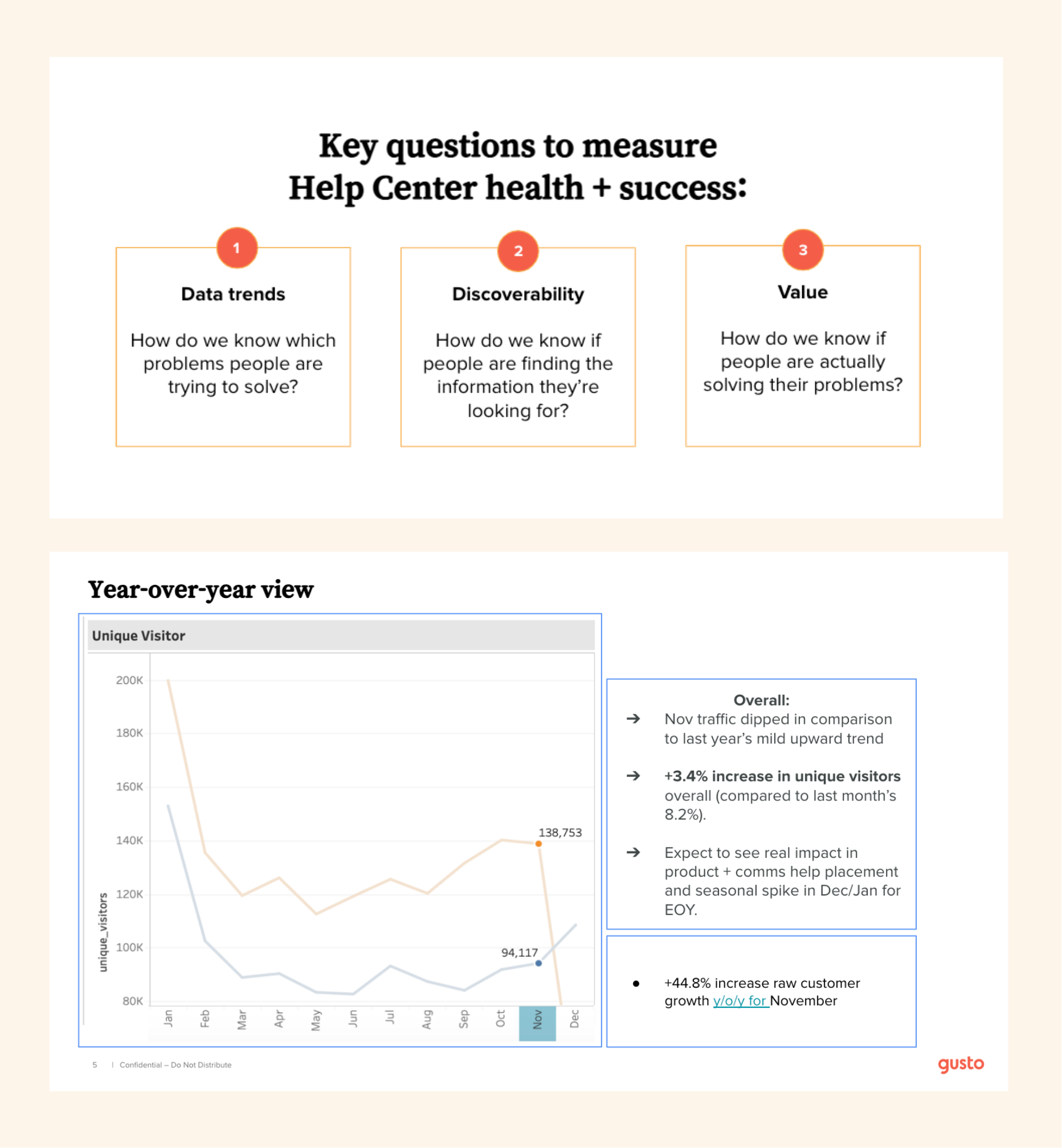
Perform an A/B tests to measure engagement rates between (2) content formats, and a holdout group.
Test and tweak entry point efficacy, standardize content layouts for various education types (text, video, charts, etc), then expand to all pages in product.
What I Led
Led a full-system audit to identify structural gaps, duplication, and failure points
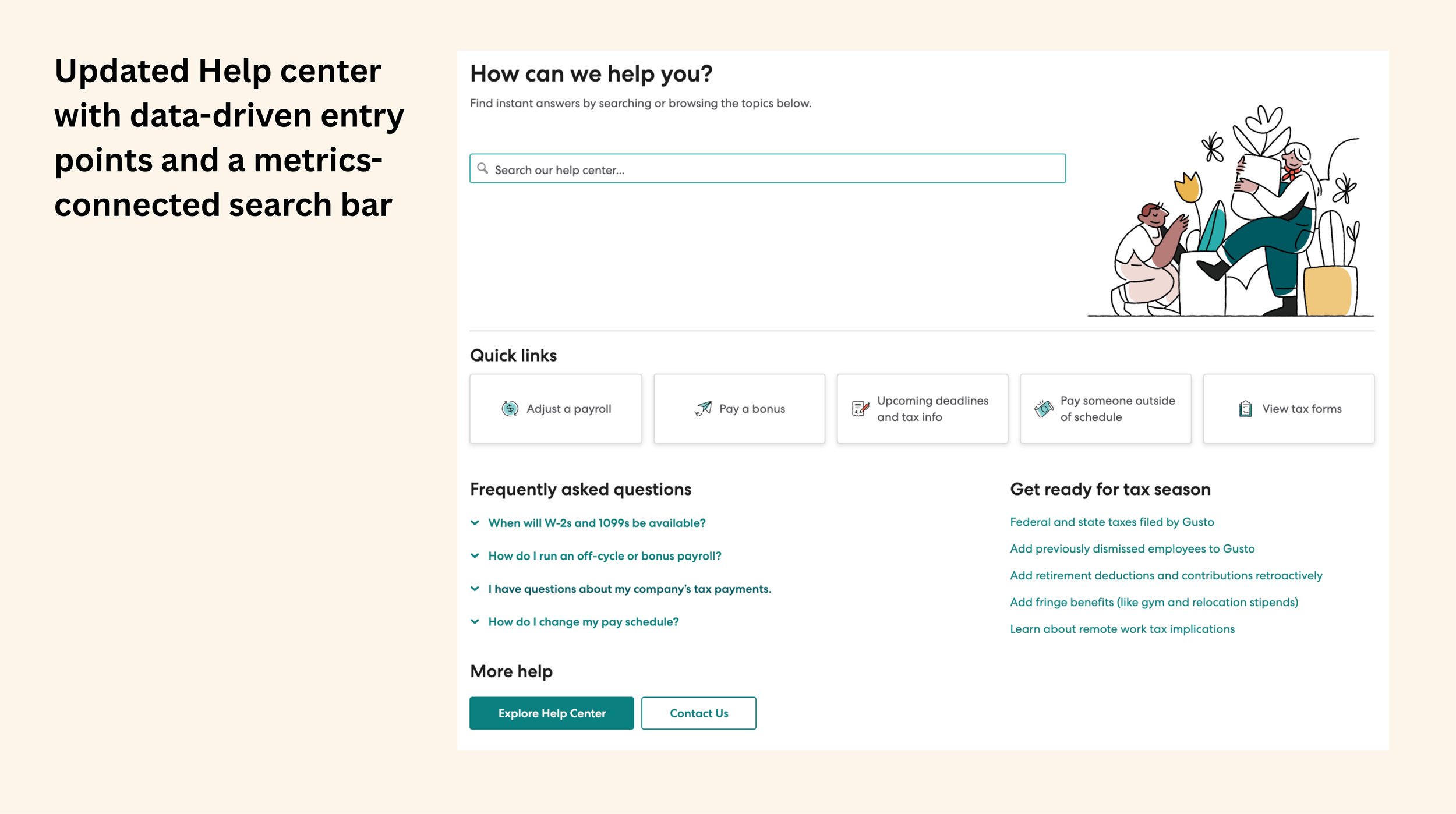
Redesigned information architecture and taxonomy to align with user behavior
Built a more intuitive Help Center structure optimized for findability
Introduced in-product support (help drawer) to surface answers at the point of need
Drove cross-functional alignment across CX, product, and data to ensure performance
The Outcome
18% reduction in support call volume over two quarters
Increased self-service success and reduced time-to-answer
Lower operational strain on support teams
A scalable support system aligned with product experience
Why It Matters
This work transformed support content into product infrastructure. Instead of scaling support headcount, we scaled self-service—creating a system that:
meets users where they are
reduces friction
scales with the product
Core Skills Demonstrated
Content Systems Design · Information Architecture · Self-Service Optimization · Cross-functional Leadership · Support Strategy